
The Vital Role of Trust
The Vital Role of Trust
02-December-2021The Growing Importance of Transparent, Open Leadership in times of Uncertainty
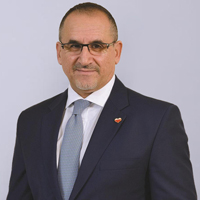
By Hassan Amin Jarrar, Chief Executive Officer of Bahrain Islamic Bank
When a business is tested by a worldwide crisis, it not only permeates into top-line executive management decision-making and profit margins - it affects the livelihood of each and every employee. Indisputably, while the ongoing pandemic has affected the world at large on every imaginable level, it has also acted as a powerful catalyst for divulging truths; boomeranging bullets we might have formerly dodged. Moreover, it has categorically exposed the cracks in pre-planned strategies that were far too inflexible and unflinchingly revealed red flags in leadership styles.
Above all, the ongoing pandemic has reminded us all, through collective adversity, to rediscover what truly matters in business and in life; realigning authentic priorities we might have forgotten, having functioned for so long on auto-pilot.
As leaders, what we have swiftly come to realize in the face a crisis of this scale is that even the best laid predefined response plans of the past no longer fly. It’s high time we relinquish the old-fashioned belief that a top-down response will engender stability. In fact, rigid command-and-control structures and scripted responses only tide companies over for routine emergencies where verified information is lacking.
Effective leadership today requires adopting an innovative mindset, maintaining a fine-tuned ability to think clearly to successfully mobilize our organizations forward, and setting clear priorities in response. More importantly, it lies in purposefully empowering our people to discover and implement solutions that serve those priorities, by creating a culture of true transparency and openness. Only by laying an earned foundation of trust can rapid-problem solving occur when facing high-stress and chaotic conditions.
One of the most powerful consequences of the coronavirus pandemic, further proliferated by the digital era we are living in, has been exposing the gap between what company leaders say, what they mean, and how they actually behave. Even when communicated from the highest level, if a company puts forward false claims to be progressive with an open work culture, when in stark reality, their work policies are far too rigid and the atmosphere is uncollaborative – this will not only lead to resentment, but a serious lack of trust.
In the peak of the pandemic, for companies that restricted remote work for employees who could have reasonably worked from home, this invariably sent a message. Primarily, that they don’t trust their employees, and also refused to surrender to the perceived lack of control they have over people working in remotely.
Too often, an old-fashioned mentality and top-down approach lead companies down the wrong track. Ultimately, it’s the people of a company that form the backbone of its workforce. Naturally, they ought to be given every consideration and be the first to know of any changes and decisions that affect them.
 Without fail, hidden management agendas that happen behind closed doors without involving teams lead to incredibly low levels of trust, engendering a toxic culture, and leading to disruptive office politics. By contrast, when leaders willingly share information, and genuinely engage their teams with good intent, it creates trust and credibility. Even in the face of disruptive change, under liberal leadership, the entire organization gets to work with dedication and efficiency, feeling safe enough to take risks and come up with new ideas without fear of stepping out of line. In order to survive going forward, companies must work towards creating cultures that prioritize their employees’ well-being, enabling them to be more inspired and engaged than ever before.
To clarify, the tendency for many leaders to hold their cards too close to their chest is not necessarily a form of manipulation. Often, it is simply their way of ‘sheltering’ people from bad news, out of concern that they will panic without cause. However, this approach is the exact opposite of empowerment, and communicates a lack of trust in their ability to deal with adversity.
When all is said and done, trust is one of our baseline human tendencies. Leaders today ought to be wholeheartedly embracing two-way conversations, deliberately extending trust to their teams. As companies navigate a drastically changed economic outlook and a highly uncertain future ahead, trust will be the single-most important currency for change. Therefore, it is vital to tell the full story, and avoid the inclination to sugar-coat information or downplay real issues. People will always be inspired by leaders who are open, authentic, and real – particularly in the face of difficult times.
As humans, the best way to learn from any negative experience is to pause, take stock of the situation, and actively reflect on lessons learned. As we begin to emerge from this pandemic, before implementing any changes on a company-level, or setting strategies for post-pandemic customers, the onus lies on us, as leaders, to self-reflect, confront reality head on.
Perhaps, one of biggest takeaways from the past two years, is our collective and renewed resiliency, and commitment to emerging as better versions of ourselves – as leaders, as individuals, and as members of the human race.